
Fewer volumes of literature reveal more about the sociocultural realities of a specific time period than Casanova's memoirs. The memoirs of the famous ladies' man are often remembered more for their salacious seductions than anything else, but what exists inside of the book is a detailed record of every element of Italian society of the time. His notoriously detailed narration style effectively gives us an anthropological record of the society of the era, prized as much as a contemporary historical record as literature.
Wine and literature are natural bedfellows, and Casanova's memoirs are no exception. I noticed this while reading the memoirs myself, and it got me curious. In the book, Casanova describes in detail the Refosco wines he encounters in his travels:
"The good lady gave us a good dinner of fish cooked in oil, which in Orsara is delicious, and we drank some exquisite refosco. During our meal, a priest happened to drop in, and, after a short conversation, he told me that I ought not to pass the night on board the tartan, and pressed me to accept a bed in his house and a good dinner for the next day in case the wind should not allow us to sail; I accepted without hesitation. I offered my most sincere thanks to the good old lady, and the priest took me all over the town. In the evening, he brought me to his house where we partook of an excellent supper prepared by his housekeeper, who sat down to the table with us, and with whom I was much pleased. The refosco, still better than that which I had drunk at dinner, scattered all my misery to the wind, and I conversed gaily with the priest."
— Episode 2, Chapter VII, p. 189. Arthur Machen Translation.
He gets invited in to have some wine and food, and his host offers him a delicious Refosco, which raises his spirits. To me, that is the best type of tasting note. This scene happens as Casanova is passing through the city of Orsera, which is now Vrsar in Istria, modern-day Croatia. Reading this passage, I couldn't help but think of Croatia as the origin of the Tribidrag grape, which science has shown us is actually Zinfandel, also known as Primitivo. Croatia never gets any credit in today's wine media, despite being the origin of many wines. Of course, in Casanova's time Istria was still part of the Republic of Venice, highlighting the different geographic relationships of that era compared to ours. Casanova was a Venetian, traveling through the local areas of his republic in the 18th century.
The common wines consumed in the area have changed, and unfortunately Istria is no longer a popular or highly regarded wine region. You are hard pressed to find a Croatian wine ever discussed in any wine publication, or even find one for sale in your local area.
From Istria to Napa
Croatians brought many grapes to California in the early days of Napa, explaining Zinfandel's presence. Refosco was also once planted there. Henry Walker Crabb, one of the most significant pioneering winemakers in Napa Valley history, cultivated one of the largest grape collections in the world at his To-Kalon estate in Oakville, eventually assembling close to 400 varieties. Among them was a grape he called "Crabb's Black Burgundy," which won awards at expositions across the United States and earned him the title "Wine King of the Pacific Slope" from the Chicago Herald. In 1886, a UC Agricultural College report listed Crabb's Black Burgundy as a synonym for Refosco, with Dr. Eugene W. Hilgard writing that "their respective modes of growth and the composition of their respective wines are indistinguishable." Whether it was truly Refosco or another variety mislabeled in that era's widespread varietal confusion remains debated, but the identification held for the better part of a century.
The broader pattern is clear regardless: Eastern Europeans, many of them from the Adriatic coast, planted a remarkable share of the original Napa vineyards. The Dalmatian and Istrian connection to California viticulture is one of the more underappreciated chapters in American wine history. Mike Grgich, the Croatian-born winemaker who made the Chateau Montelena Chardonnay that won the 1976 Judgment of Paris, is perhaps its most famous thread. But Refosco, Zinfandel, and dozens of other varieties arrived decades before him, carried in the luggage of immigrants who simply wanted to grow what they had always known.
This is just one hundred years after Casanova's lifetime, indicating an interesting cultural cross-pollination we rarely consider. Just over a hundred years from Casanova's courtly adventures in the Venetian Republic to the first era of production in Napa Valley. That is indeed a strange contextualization of wine culture.
The Grape Itself
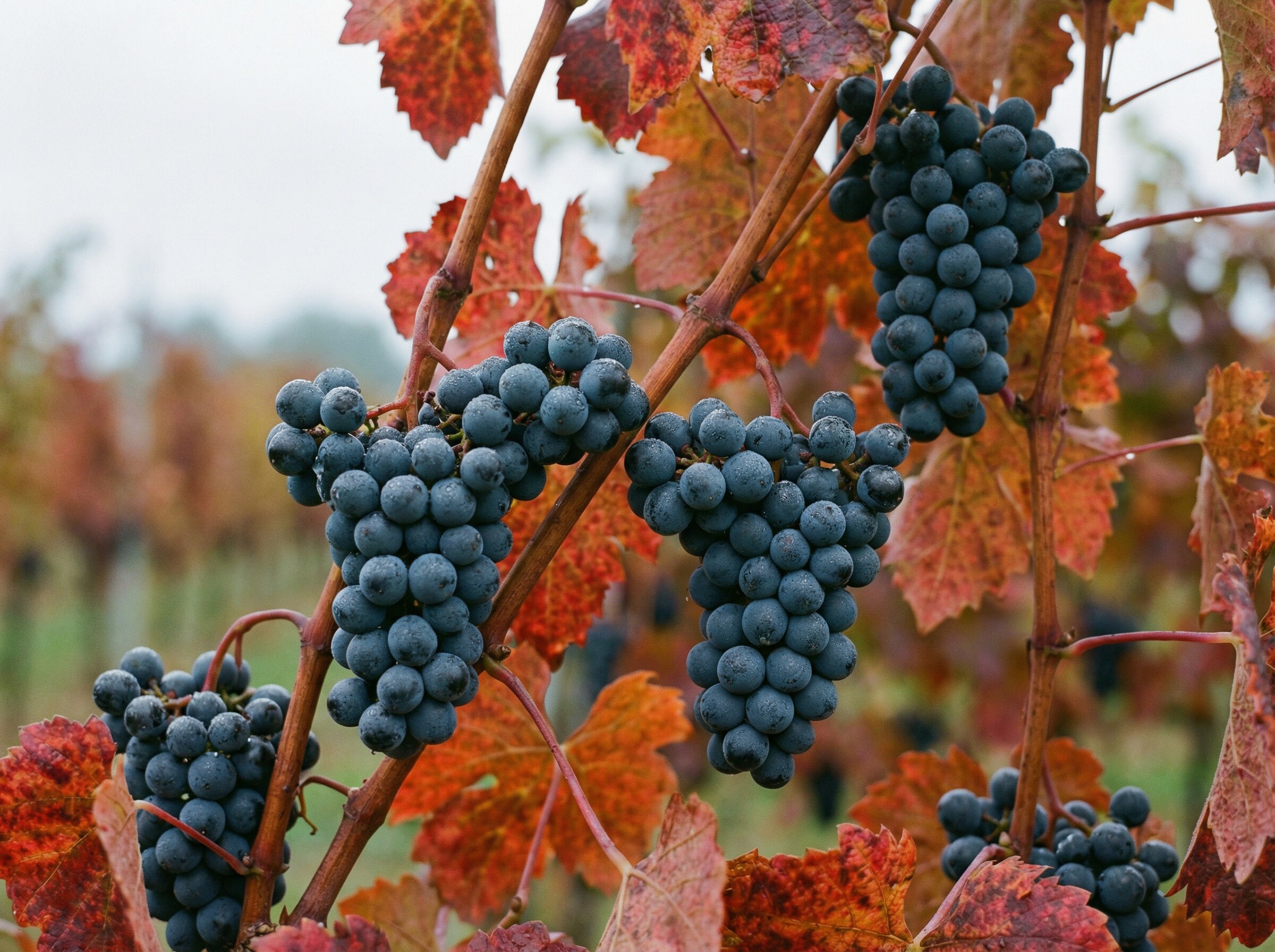
Luckily for us, parts of historic Istria were incorporated into modern-day Italy, and Italian wines are more widely available in the current wine supply chain. Modern areas like Friuli Venezia Giulia, Gavi, and Trentino produce Refosco, and they can be quite delightful. Refosco dal Peduncolo Rosso, literally "Refosco with the red stems," is generally considered the standout member of the Refosco family, reaching its finest form in Friuli's Colli Orientali DOC, where it delivers deeply flavored wines marked by vivid fruit, pronounced minerality, and lively, tart acidity.
The grape's pedigree stretches further back than any MW study guide will tell you. Refosco dal Peduncolo Rosso has a long, documented history in the Friuli region, and is cited in the Annals of Friuli by Francesco di Manzano as early as 1390 as the source of the favorite wine of Livia, the second wife of Augustus Caesar. That claim traces back to Pliny the Elder himself, who recorded it in his Natural History nearly two thousand years ago:
"Julia Augusta gave the credit for her eighty-six years of life to the wine of Pucinum, having never drunk any other. It is grown on a bay of the Adriatic not far from the source of the Timavus, on a rocky hill, where the breeze off the sea ripens enough grapes to make a few casks; and no other wine is considered more suitable for medicinal purposes."
— Pliny the Elder, Natural History, Book XIV, §60 (Rackham translation). c. 77 AD.
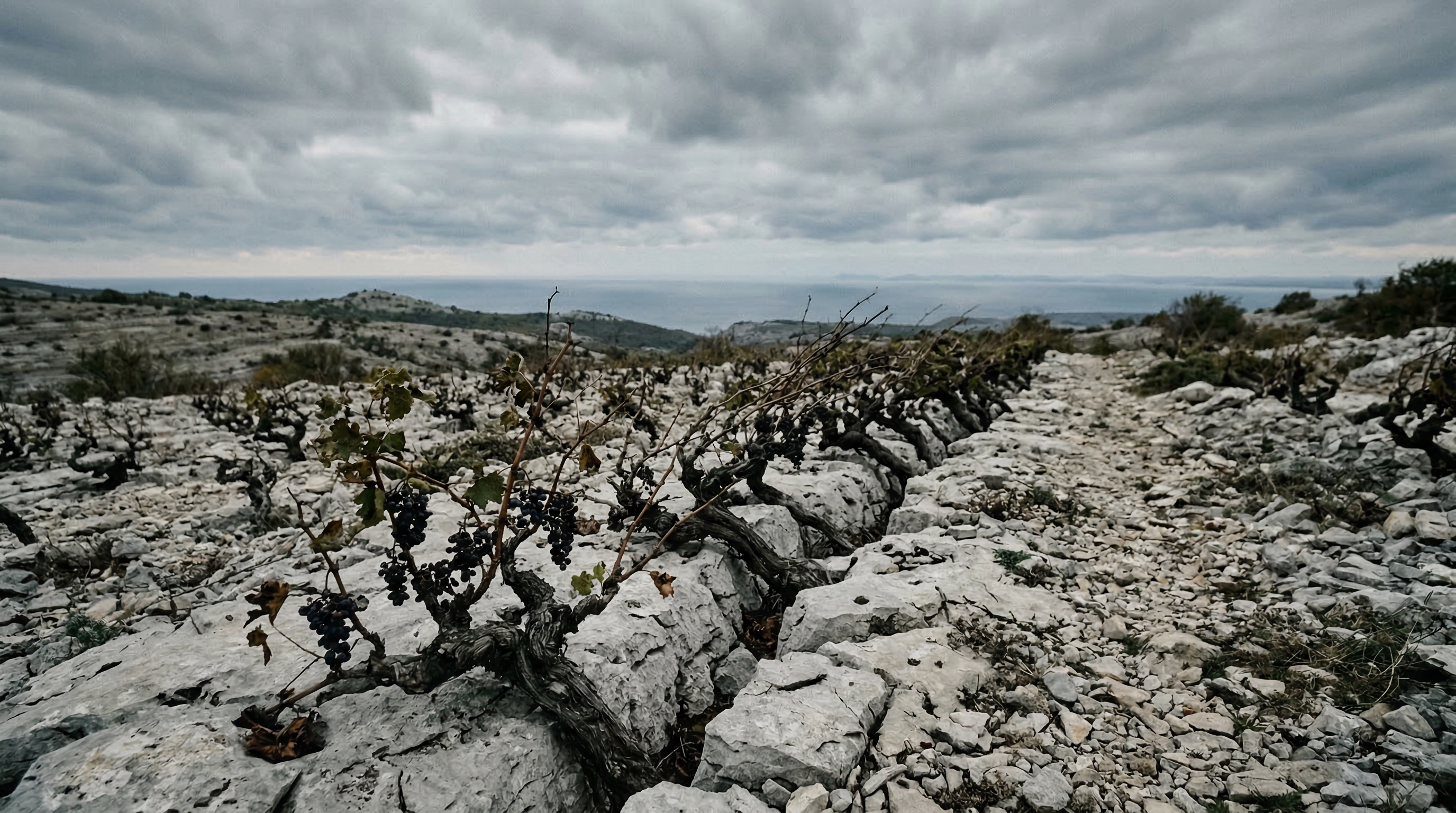
The "Pucinum" Pliny describes, grown near the Timavus river on the Adriatic coast in the rocky hills of what is now the Friuli-Venezia Giulia and Istrian borderland, is widely understood by modern scholars to be the ancestor of what we now call Refosco. The overlap of geography is exact: the same hills, the same sea breeze, the same terrain that Casanova passed through nearly seventeen centuries later on his way to Orsera.
DNA profiling has since added another layer of intrigue. Research at the San Michele all'Adige institute revealed a genetic connection between Refosco dal Peduncolo Rosso and Marzemino, another obscure, ancient northern Italian variety that Mozart happened to immortalize in Don Giovanni, where the libertine Don raises a glass of it just before he is dragged to hell. History, apparently, keeps returning the same cast of characters.
In the glass today, the wine remains as singular as its biography. Deeply colored, almost inky violet in youth, it carries dark plum and spiced fruit on the palate, with characteristic lively acidity and firm, dry tannins that make it a natural match for the cured meats and hearty bean dishes of Friuli. It is a wine that demands food, demands attention, and rewards patience. Refosco is an ancient grape, referenced by great writers for millennia. Why haven't you drunk any lately?
Stop Measuring, Start Being Seduced
For a man with such excellent taste as Giacomo Casanova, we would be wise to put away our wine point scores and tasting sheets and experience the full sensual pleasure of what he enjoyed. We've spent enough time focusing on the same range of noble grape varietals, but not enough time enjoying the legendary wines of previous generations. Refosco is now a minor grape and not likely to be on anyone's wine exam, but does that really matter? Casanova, even the librarian that he was, would not care. Maybe it's time to stop measuring wines and time to start being seduced by them.
And if that is not enough to convince you, consider one more advocate. Julia Augusta, wife of the most powerful man in the Roman world, drank nothing else for the last decades of her life. She attributed her longevity to it. She lived to eighty-six. The wine she drank came from the same hills, the same sea-wind, the same limestone that we have been tracing through this essay. Whether you call it Pucinum or Refosco, the grape has been making its case for two thousand years. It does not need a high score. It needs a glass.
Where to Find It
Refosco is not on the shelf at most wine shops, but it is findable. These are the producers and retailers worth starting with. Links marked with an asterisk (*) may be affiliate links — if you buy through them, a small commission comes back to Nico Vino at no cost to you.
Vignai da Duline “Morus Nigra” — Friuli Colli Orientali
Imported by Kermit Lynch, this is the benchmark domestic option. Organic farming, aged in small oak, from limestone and clay soils. Violet, iron, wild berry, stony finish. One of the finest examples you will find in the US market.
Buy from Kermit Lynch (~$58) →Aquila del Torre — Friuli Colli Orientali DOC
Imported by Marc de Grazia Selections. Certified organic, 100% Refosco dal Peduncolo Rosso. Violet, plum, white pepper on the nose; elegant, fine-grained tannins on the palate. A more approachable entry point to the variety.
Find a bottle near you via Wine-Searcher →Search All Refosco — Wine-Searcher
Wine-Searcher aggregates inventory from retailers across the US. Search "Refosco dal Peduncolo Rosso" and filter by your state to see what is actually available near you or ships to your address.
Search Refosco on Wine-Searcher →Wine.com — Delivered to Your Door
Wine.com ships to most US states and stocks a range of Friuli producers. Search "Refosco" to see current inventory.
Shop Refosco on Wine.com * →References
- Casanova, Giacomo. The Memoirs of Jacques Casanova de Seingalt, Vol. 2, Chapter VII, p. 189. Trans. Arthur Machen. London: privately printed, 1894.
- Pliny the Elder. Natural History, Book XIV, §60. Trans. H. Rackham. Loeb Classical Library, Harvard University Press, 1945. c. 77 AD. Available at attalus.org.
- di Manzano, Francesco. Annals of Friuli. 1390. As cited in Kobrand Wine and Spirits, "Refosco Grape Glossary" (kobrandwineandspirits.com).
- Stamp, Elaine. "The True Story of To-Kalon Vineyard." GuildSomm, 2015. guildsomm.com.
- Hilgard, Dr. Eugene W. UC Agricultural College Report, 1886. As cited in GuildSomm and the History of To-Kalon (historyofto-kalon.com).
- Tenimenti Civa. "Refosco dal Peduncolo Rosso: Characteristics and Food Pairings." 2023. tenimenticiva.com.
- San Michele all'Adige Research Center. DNA profiling of Refosco dal Peduncolo Rosso and genetic relationship to Marzemino. As cited in Kobrand Wine and Spirits Grape Glossary.
- Wine-Searcher Editorial. "Refosco Wine." Last updated December 2023. wine-searcher.com.